

 Updated
Disclaimer: This article is for informational purposes only and reflects information available at the time of publication. Platform offerings, fees, regulations, features, and trading conditions may change over time. Readers should conduct their own research before making any trading or investment decisions. The platforms included in this guide were selected using the editorial criteria described below. “Best” does not mean suitable for every trader and does not constitute a personal recommendation.
Editorial Disclosure: This guide is published by Vantage. Vantage products are included in this comparison. The rankings reflect our editorial assessment based on the criteria described below and are intended for informational purposes only. They are not an independent ranking or a personal recommendation.
In 2025, U.S. listed options volume topped 15.2 billion contracts—a 26% above the previous record in 2024, while average daily volume reached 61 million contracts.1 That level of activity helps explain why traders compare the best day trading platforms so closely. During active sessions, chart speed, order workflow, costs, margin visibility, and platform stability can all shape execution.
If you’re new to the term, day trading usually means opening and closing positions within the same trading day. The platform is only one part of that workflow. A broker or exchange connection still determines available markets, pricing, margin rules, product access, and how orders are routed or filled.
This guide evaluates day trading platforms and brokers by practical criteria: Fees, execution workflow, charting, order types, mobile access, automation, regulation, and risk tools. It includes CFD platforms, stock and options brokers, futures-capable platforms, and charting-first platforms, so readers can compare by workflow for a more comprehensive view.
Key Points
- For day traders, platform choice largely impacts execution workflow, cost visibility, charting, and risk controls.
- CFD platforms, stock brokers, futures platforms, and charting platforms serve different day-trading needs.
- No day trading platform eliminates leverage, liquidity, execution, or account balance risk.
8 Best Day Trading Platforms At a Glance
Last updated: 7 July 2026. The table below summarises the best day trading platforms in this guide. It is not a personal recommendation. Platform availability, costs, instruments, and regulatory protections vary by entity, account type, and jurisdiction.
| Platform/Broker | Recommended For | Market Access | Platform Type | Main Consideration |
| Vantage Markets | CFD day trading | Forex, indices, commodities, shares, ETFs, bonds CFDs | MT4, MT5, TradingView, Web Trading, Vantage App | CFD risk, leverage, spreads, swaps, and jurisdiction limits |
| Interactive Brokers (IBKR) | Advanced multi-market access | Stocks, ETFs, options, futures, currencies, bonds, funds | TWS, IBKR Desktop, mobile, web | More complex workspace for new users |
| Charles Schwab thinkorswim | US desktop charting | Stocks, ETFs, options, futures, forex, mutual funds | Desktop, web, mobile | US-focused account and product access |
| TradeStation | Testing and automation | Stocks, ETFs, options, futures, futures options | Desktop, web, mobile, simulated trading | Learning curve for advanced features |
| IG Group | Active and beginner traders | CFDs, spread betting where available, shares, ETFs, options, forex | Web, app, ProRealTime, MT4, MT5, TradingView | Product availability and tax treatment vary |
| Pepperstone | Forex and CFD day traders | Forex, indices, commodities, shares CFDs and other CFDs | MT4, MT5, cTrader, TradingView | CFD-only structure and jurisdiction limits |
| Webull | Paper trading and mobile-first practice | Stocks, ETFs, options, futures, and bonds in some regions | Mobile, desktop, web, paper trading | Regional product and margin limits |
| TradingView | Charting and alerts | Depends on data plan and connected broker | Web, desktop, mobile charting platform | Broker integration required for live execution |
How We Ranked These Day Trading Platforms
In our best day trading platforms comparison guide, we review them based on the following factors:
- Execution Workflow: How quickly a trader can move from chart to order ticket.
- Trading Costs: Spreads, commissions, platform fees, market data fees, swaps, and margin interest.
- Market Access: Forex, indices, commodities, shares, exchange-traded funds (ETFs), options, futures, and contracts for difference (CFDs).
- Charting Tools: Timeframes, indicators, drawing tools, templates, alerts, and layout flexibility.
- Order Types: Market, limit, stop, stop-limit, trailing stop, bracket, and conditional orders where available.
- Risk Tools: Stop-loss, take-profit, margin display, alerts, demo access, negative balance protection, and account monitoring.
- Platform Stability: Responsiveness during high-volume sessions matters when prices move quickly.
- Automation: Expert Advisors (EAs), application programming interfaces (APIs), scripts, strategy testers, simulated trading, and rule-based workflows.
- Regulation and Entity Access: Authorisation, client protections, jurisdiction availability, and product restrictions.
- Mobile and Web Access: Whether the platform supports monitoring and order management across multiple devices.
- Education and Support: Tutorials, platform guides, demo tools, webinars, and help documentation.
| Note: Rankings reflect editorial assessment based on public broker and platform information, official documentation, and live feature checks where available. Different traders may reach different conclusions depending on their objectives, experience, and trading requirements. Fees, spreads, regulation, margin terms, and product access can change, so readers should verify current terms with each provider before opening an account. |
1. Best CFD Day Trading Platform: Vantage Markets
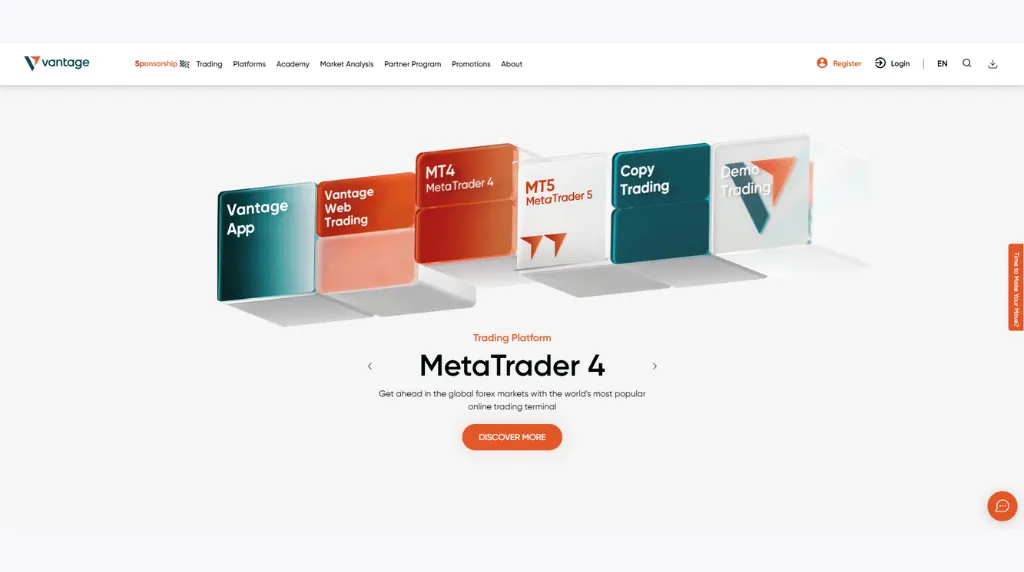
Vantage Markets may suit CFD day traders who want access to several execution and charting environments through a single broker platform. Through Vantage, traders can use MetaTrader 4, MetaTrader 5, TradingView, Vantage Web Trading, and the Vantage App for CFD market access, depending on account type, entity, and jurisdiction.
MT4 gives a familiar CFD terminal, MT5 adds more built-in timeframes and order functions, TradingView supports chart-first analysis, Web Trading provides browser access, and the Vantage App supports mobile account and trade management.
- Best For: CFD traders who want MT4, MT5, TradingView, browser, and mobile access.
- Markets: Forex, indices, commodities, shares, exchange-traded funds (ETFs), bonds, and other CFD instruments where available.
- Costs to Check: Spread, commission, swap rates, minimum deposit, currency conversion, and any entity-specific charges.
For a broader platform comparison, readers can also review Vantage Markets’ best CFD trading platforms guide.
Risk Note: CFDs are leveraged products, so small price moves can have a larger effect on account balance.
| Bottom Line: Vantage Markets may suit CFD day traders seeking multi-platform access, charting choice, and a broker-led execution workflow. |
2. Best for Advanced Multi-Market Access: Interactive Brokers
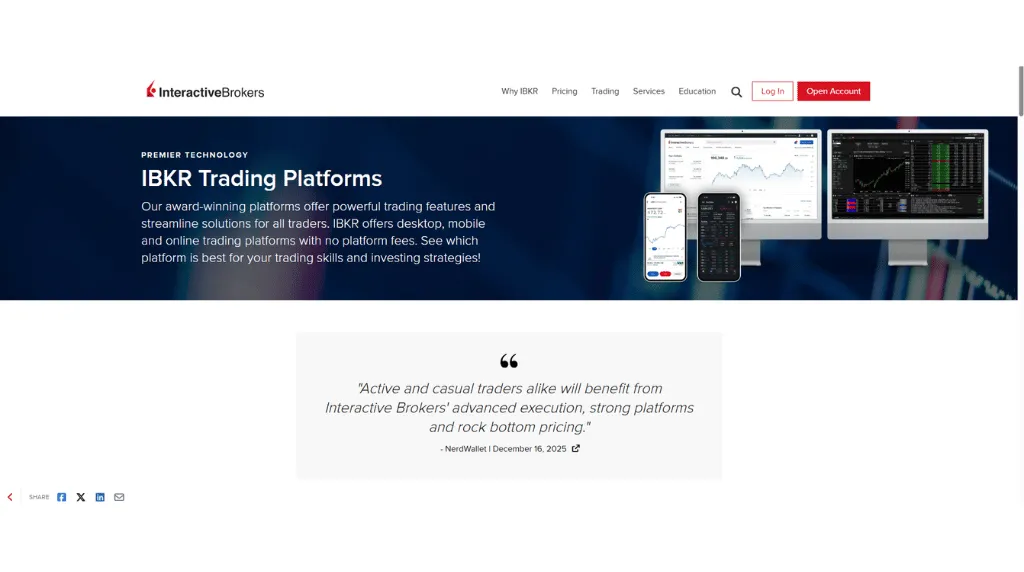
Interactive Brokers (IBKR) is commonly considered by experienced active traders who need broad access across asset classes and regions. Its Trader Workstation (TWS) supports stocks, options, futures, currencies, bonds, funds, and other products on more than 170 markets worldwide from one platform.5
That market range can matter for day traders who prefer to compare several instruments in one session. For example, a trader may watch an equity index future, a sector ETF, and single-stock options before deciding whether a setup has enough liquidity and spread depth.
- Best For: Advanced traders who need global market access and detailed order tools.
- Key Tools: TWS, IBKR Desktop, mobile platforms, order routing, scanners, and multi-asset watchlists.
- Main Consideration: The platform depth can create a steeper learning curve for beginners.
| Bottom Line: Interactive Brokers is ideal for advanced, multi-market day traders who need depth more than a simplified interface. |
3. Best Desktop Charting Platform for US Traders: Charles Schwab thinkorswim
Charles Schwab’s thinkorswim desktop platform is built around customisable charts, analysis tools, screeners, alerts, and real-time insights. Schwab described its thinkorswim desktop as its most powerful and customisable trading platform.6
This makes thinkorswim relevant for US traders who day trade stocks, options, futures, or forex through a US brokerage account. The platform is especially useful when the workflow depends on chart layouts, option chains, alerts, and multi-monitor desktop setups.
- Best For: US traders who prioritise desktop charting and active-trader tools.
- Key Tools: Customisable charts, alerts, screeners, education, and desktop/web/mobile access.
- Main Consideration: Product access and account rules are US-focused.
| Bottom Line: thinkorswim is ideal for US traders who need deep charting, alerts, and desktop-led order review. |
4. Best for Strategy Testing and Automation: TradeStation
TradeStation is designed for traders who want a research-and-execution workspace across stocks, ETFs, options, futures, and futures options. Its platform suite includes desktop, web, mobile, and specialised tools for futures options and risk management.7
TradeStation also offers simulated trading for stocks, options, and futures, with real-time data and historical databases for backtesting and forward testing strategies before live execution.8
- Best For: Experienced active traders who test rules before live execution.
- Key Tools: Desktop platform, web trading, mobile apps, simulated trading, strategy testing, and automation workflows.
- Main Consideration: More advanced features can require a longer setup and learning process.
| Bottom Line: TradeStation is ideal for traders who want testing, automation, and structured strategy review built into the platform workflow. |
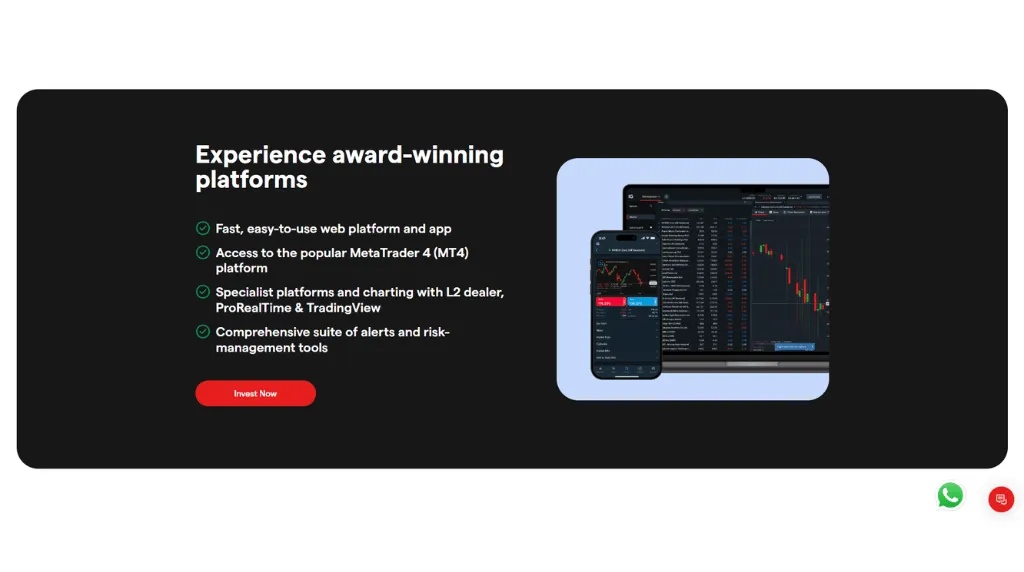
5. Best Day Trading Platform For Beginners: IG Group
For beginner day traders, IG Group offers trading and investing access across web, app, and third-party platform connections. Depending on the country of residence, IG’s clients can access shares, ETFs, and CFDs across 13,000 markets, and broader trading across more than 17,000 markets with regional product differences.9
For UK traders and investors, IG is often considered due to its long-standing presence in the United Kingdom where spread betting is available as well as its CFD access and third-party platform options. Tax treatment depends on personal circumstances and may change, so spread betting should not be treated as automatically tax-free for everyone.
- Best For: Beginner traders comparing broad product access and established platform infrastructure.
- Key Tools: Web platform, mobile app, ProRealTime, MetaTrader 4, MetaTrader 5, and TradingView where available.
- Main Consideration: Product availability, costs, and regulatory protections vary by region and entity.
| Bottom Line: IG is ideal for new traders who want a large market range and established regional platform access, subject to local eligibility. |
6. Best for Forex and CFD Day Trading: Pepperstone
Pepperstone is often considered by forex and CFD day traders because it offers MT4, MT5, cTrader, and TradingView in its platform suite. Clients can leverage MT4 for automation, MT5 for more markets and order types, TradingView for chart-led trading, and cTrader for a liquidity-focused environment with robot development tools.10
- Best For: Forex and CFD traders comparing platform flexibility and pricing models.
- Key Tools: MT4, MT5, cTrader, TradingView, automation support, and charting tools.
- Main Consideration: CFD trading risk, spread widening, swap costs, and jurisdiction limits still apply.
| Bottom Line: Pepperstone is strongest for forex-focused CFD day traders who want several third-party platform choices. |
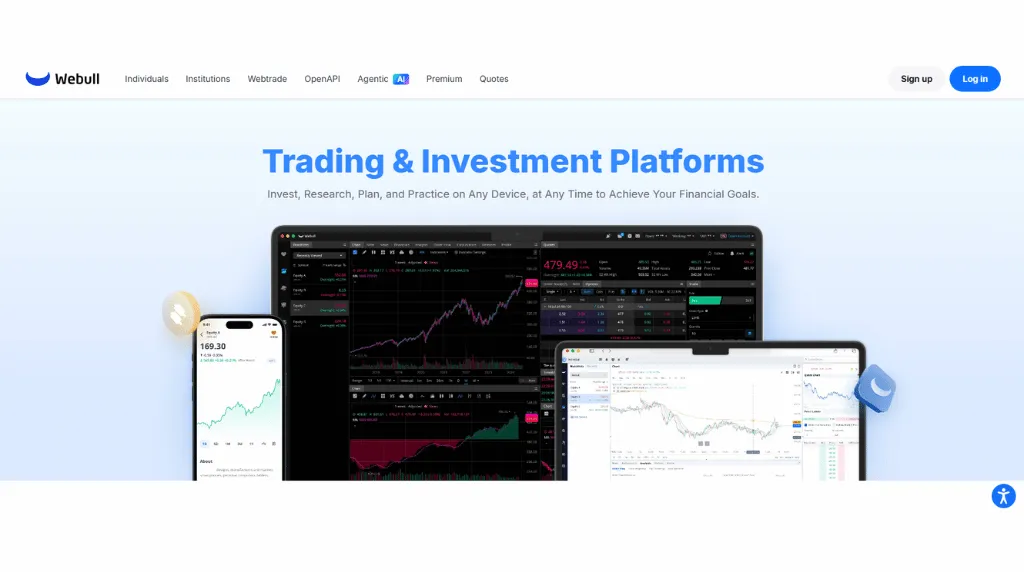
7. Best for Paper Trading and Mobile-First Day Trading: Webull
Webull is commonly associated with mobile-first trading, charting, and paper trading. Users can practise stocks, ETFs, options, and futures trading in a live market simulation across Webull’s platforms.11
Paper trading (also known as demo trading) can help day traders test order tickets, watchlists, charts, and alerts without risking real capital. The caveat is that paper trading cannot fully reproduce live execution, liquidity, spreads, platform pressure, or the emotional response to live funds.
- Best For: Day traders comparing mobile-first workflows and simulated trading.
- Key Tools: Paper trading, mobile platform, desktop/web access, charts, watchlists, and alerts.
- Main Consideration: Product access and fees vary by region, account type, and trading permission.
| Bottom Line: Webull is ideal for users who want to practise day-trading workflows before moving to live execution. |
8. Best Charting Platform for Day Traders: TradingView
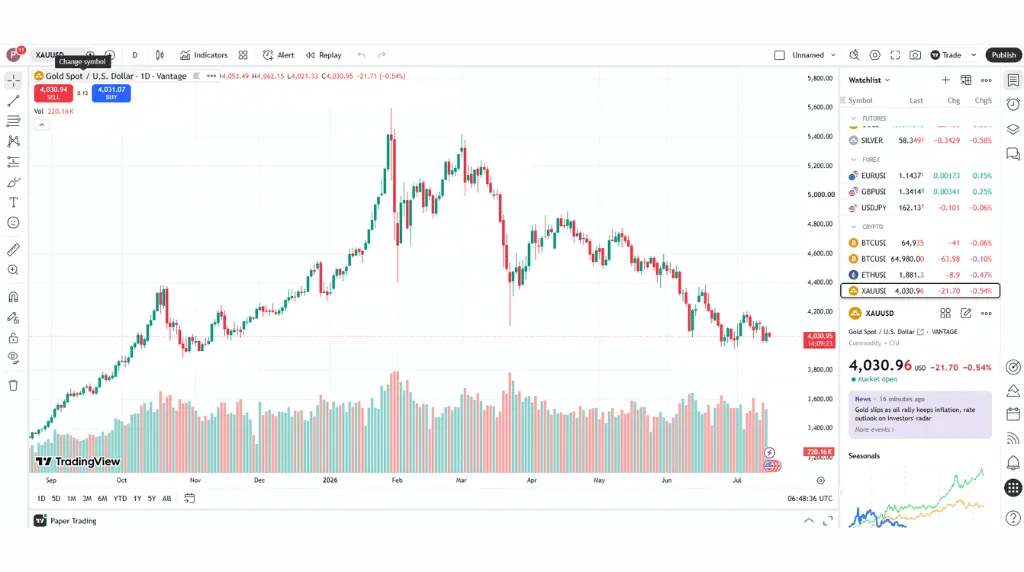
Did you know that TradingView is not a broker by default? It’s actually a charting, screening, and social network platform that can connect to supported brokers for live order placement. TradingView also offers features such as chart types, price alerts, technical alerts, calendars, screeners, broker comparison tools, and trading tools in one platform.12
For day traders, TradingView’s charts, watchlists, alerts, scripts, and cross-device access can support market scanning before an order is sent through a connected broker like Vantage Markets. TradingView also stated that alerts can be “created on data series, indicators, chart patterns, strategies, and drawing tools”.13
- Best For: Chart-first traders who prioritise visual analysis, alerts, scripts, and browser-based workflows.
- Key Tools: Supercharts, watchlists, Pine Script, alerts, screeners, and broker integration.
- Main Consideration: Execution, pricing, and available instruments depend on the connected broker.
For a deeper comparison of execution-first and chart-first workflows, read Vantage Markets’ MetaTrader vs TradingView guide.
| Bottom Line: TradingView is strongest for traders who want charting, visual market research, alerts, and broker-connected execution. |
Day Trading Platform Costs to Compare
Some traders may not be aware that day trading costs are not limited to commission. The platform usually depends on total round-turn cost, product type, market conditions, holding period, and account structure. Here’s a brief overview of the typical cost types, why they matters for day trading, and what to check:
| Cost Type | Why It Matters for Day Trading | What to Check |
| Spread | Affects the entry and exit price difference | Typical spread during active sessions and volatile periods |
| Commission | Adds to each side or round turn | Per-side, round-turn, per-share, or per-contract pricing |
| Market Data Fee | Can affect real-time quote access | Free delayed data vs paid exchange data |
| Platform Fee | Can affect monthly cost | Whether the fee is waived by activity or account tier |
| Margin Rate | Applies to securities margin accounts | How borrowed funds are charged and monitored |
| Swap | Can apply if leveraged positions remain open overnight | Product-specific overnight funding or financing rate |
| Currency Conversion | Matters when trading overseas assets | FX conversion fee, spread, and settlement currency |
| Inactivity/Withdrawal Fee | Can affect low-frequency users | Broker-specific account charges |
For CFDs, the main costs are often spread, commission where applicable, and overnight funding if a position remains open beyond the trading day. For exchange-traded futures, the contract is standardised, traded on an exchange, and comes with contract size, margin, expiry, and rollover considerations. CFDs can provide more flexible position sizing and no direct futures expiry for spot-style CFD exposure, but leverage, spread, funding, execution, and stop-out risk still matter.
The table below compares the typical day trading costs for the abovementioned platforms and brokers as of 7 July 2026.
| Platform/Broker | Published Cost Figures to Compare | Platform/Data Fees | Margin/Funding Costs |
| Vantage Markets | Standard STP: Spreads from 1.0 pip with no commission with minimum deposit of USD50. Raw ECN: Spreads from 0.0 pip plus USD3.00 per standard lot, per side with minimum deposit of USD50. Pro ECN: Spreads from 0.0 pip plus USD1.50 per standard lot, per side with minimum deposit of USD10,000. | MT4, MT5, TradingView, Web Trading, and Vantage App access depend on entity, account type, and jurisdiction. | CFD swaps or funding can apply if positions remain open after the trading day. Stock and ETF CFDs may have separate commissions or charges. |
| Interactive Brokers | IBKR Lite: USD0 commission for US-listed stocks and ETFs for US residents. IBKR Pro stocks/ETFs: Tiered USD0.0005-0.0035/share or fixed USD0.005/share. Options: Tiered USD0.15-0.65/contract or fixed USD0.65/contract. Futures: Tiered USD0.25-0.85/contract or fixed USD0.85/contract.¹⁶ | No platform fees.¹⁷ US-listed stocks and ETFs can receive free real-time streaming data from Cboe One and IEX, but this is non-consolidated; other data subscriptions may cost extra.¹⁸ | Margin rates are tiered and benchmark-linked; users should check current currency and balance tier. Note: IBKR Lite availability and product access vary by country. IBKR Pro may be more relevant for active traders who need routing and advanced tools. |
| Charles Schwab / thinkorswim | USD0 online commission for US-listed stocks and ETFs, USD0.65 per options contract, and USD2.25 per futures or futures-options contract, per side.21 | thinkorswim access is available to Schwab clients, but standard pricing still applies to trades placed through the platform.21 | Base rate of 10.00% and an effective margin rate of 11.825% for USD0-24,999.99 debit balances (last updated on 12 December 2025).22 Note: US-focused. Futures, OTC equities, broker-assisted trades, exchange fees, ADR fees, and other charges can still apply. |
| TradeStation | New accounts can trade options at USD0 per leg and futures at USD0.50 per contract, with micro futures at USD0.25 per micro. Pricing may be promotional or eligibility-based.23 | Futures options at USD0.85 per contract, per side, with no platform fees and free real-time market data.24 | Margin and futures margin depend on product and account. Futures options require specific permissions and requirements. Note: Day traders should check the promotional pricing on TradeStation’s site before executing trades. |
| IG Group | CFD spreads start from 1 point on major indices. CFD costs can include spread, overnight funding, optional guaranteed stop premiums, and other activity-based charges.25 | Shares and ETFs can be accessed with USD0 commission, platform, and settlement fees, subject to regional terms.25 | CFD overnight funding can apply when positions are held overnight. Note: IG pricing is highly regional. UK, Singapore, Australia, and other entities can differ materially. |
| Pepperstone | For Razor account, raw spreads from 0.0 on FX and from 0.1 on XAU/USD, plus USD3.50 per lot, per side. Standard account is spread-based. Pricing page also references swaps.26 | MT4, MT5, cTrader, TradingView, and platform access depend on entity and account setup. | Swap or funding charges may apply on positions held overnight. |
| Webull | USD0 commissions for US-listed stocks, ETFs, and options. Certain index options can carry a USD0.50 per-contract fee, and oversized option orders can carry a USD0.10 per-contract fee. Regulatory and exchange fees may apply.27 | Depending on the region and jurisdiction, platform fees can start from USD0 and USD0 commission for US stocks.27 Note: Not every Webull region offers the same futures, options, or margin terms. | Margin rates and short-selling costs vary by account and market; traders should check the current margin rates shown on Webull’s pricing page for the latest information. |
| TradingView | TradingView pricing is subscription-led: Free access and paid tiers such as Essential, Plus, and Premium. Prices can localise by country or billing choice.28 | Delayed data can be free for selected markets. Real-time exchange data is priced separately by exchange, user status, and region.29 | No broker margin rate from TradingView itself. Live execution costs depend on the connected broker. Note: TradingView should be compared as a charting/data cost, not as a standalone broker cost. |
Best Day Trading Platform by Trader Type
Different day trading platforms may appeal to different trading styles as seen from the table below:
| Trader Type | Potential Platform Choices | Why These Platforms May Fit |
| CFD day trader | Vantage Markets, Pepperstone, IG Markets | CFD market access and active-trader pricing models |
| US stock day trader | Charles Schwab’s thinkorswim, TradeStation, IBKR, Webull | US securities access and stock/options workflows |
| UK active trader | IG, IBKR, Vantage Markets (subject to the relevant entity and jurisdiction) | Regional access, local rules, and platform choice |
| Chart-first trader | TradingView | Visual analysis, alerts, scripts, and browser-first charting |
| Automation-focused trader | MT4, MT5, TradeStation, IBKR | EAs, APIs, strategy testing, and rule-based workflows |
| Mobile-first trader | Vantage App, Webull, IG Markets App | Monitoring, alerts, account access, and mobile order review |
| Beginner practising workflows | Vantage Demo Trading, Webull | Lower-pressure platform learning before live execution |
Day Trading Platforms vs. Day Trading Brokers
Some might wonder, “Is there any difference between day trading platforms and day trading brokers?”
Typically, a day trading platform is the software interface while a day trading broker provides the account, pricing, market access, regulation, order handling, and funding process. Sometimes both are bundled; sometimes a charting platform connects to a broker as per the case of TradingView.
| Term | Definition | Example |
| Platform | Software interface used to chart, analyse, and place orders | MT5, TradingView, thinkorswim |
| Broker | Firm that provides market access and account services | Vantage Markets, IG Group, IBKR |
| App | Mobile interface for trading and account access | Vantage App, Webull App, IG App |
| Integration | Connection between a platform and broker | TradingView connected to Vantage |
This distinction matters because a platform can look powerful while the connected broker determines the actual instruments, spreads, margin terms, funding methods, and execution conditions.
Is Day Trading Legal, and What Rules Apply?
Day trading rules typically depend on the country, product, account type, and broker. A trader using a US margin account can face different rules from a trader using cash equities, CFDs, spread betting, futures, or options in another jurisdiction.
In the US, the Financial Industry Regulatory Authority (FINRA) adopted new intraday margin standards in April 2026 to replace day trading margin requirements, including the pattern day trader designation and the $25,000 minimum equity requirement.3 FINRA’s investor guidance mentioned that the new rules have no $25,000 minimum equity requirement for day trading and no pattern day trader designation based on trade counting, but firms still monitor accounts against intraday margin requirements.4
That said, day trading rules can differ sharply outside of the United States. CFD rules may include leverage limits, margin close-out requirements, negative balance protection, and risk-warning language, depending on the regulator and broker entity. Product availability can also change when exchanges or regulators adjust market rules. Case in point: The World Federation of Exchanges noted that global equity derivatives trading declined by 58.4% in 2025, largely correlating with regulatory changes in India.2
| Before choosing a platform, confirm the relevant entity, account type, product permissions, margin rules, and local restrictions. |
So, Which Day Trading Platform Is Right for You?
The right day trading platform should match the user’s market, device, cost sensitivity, charting needs, and ability to monitor risk. A platform that is strong for options scanning may not be the best fit for CFD day trading, and a charting platform may still need broker integration before orders can be placed.
- Consider Vantage Markets: If you want CFD access across MT4, MT5, TradingView, Web Trading, and the Vantage App.
- Consider Interactive Brokers: If you need advanced multi-market access and professional-grade tools.
- Consider thinkorswim: If you are US-based and prioritise desktop charting, alerts, and stock/options workflows.
- Consider TradeStation: If strategy testing, simulated trading, and automation matter most.
- Consider IG: If you want established regional access, research, and broad market coverage.
- Consider Pepperstone: If you compare forex and CFD pricing across MT4, MT5, cTrader, and TradingView.
- Consider Webull: If paper trading and mobile practice are key priorities.
- Consider TradingView: If charting, alerts, scripts, and visual analysis come first.
Choose the Workflow Before the Day Trading Platform
As you would have learnt by now, the best day trading platforms are not simply the ones with the most features or the lowest costs. Instead, the day trading platform that’s suitable for you are usually the ones that fit the market being traded, the account structure, the cost model, the order workflow, and your individual risk tolerance.
Demo and paper trading can help new and aspiring day traders to explore the platform workflow first before they use live funds. Try opening charts, setting alerts, checking spread, selecting order type, reviewing volume, placing stop-loss and take-profit levels, and closing a position.
Vantage Markets offers a Demo Trading Account with virtual funds, which can be used to trial MT4, MT5, or the Vantage App under simulated conditions. Day traders should note that demo trading does not fully reproduce live execution, liquidity, slippage, or emotional pressure that comes with using real capital.
Traders who decide to move from demo trading to live trading should review the available Vantage account types, applicable trading costs, product availability, and eligibility requirements before opening a Live Account.
Frequently Asked Questions (FAQs)
What is the best day trading platform in 2026?
Contrary to popular misconception, there is no single ‘best’ day trading platform for every trader. The right choice usually depends on market access, costs, execution workflow, charting, order types, regulation, and risk tools.
For CFD day trading, Vantage Markets may suit traders who want MT4, MT5, TradingView, web, and mobile access from one brokerage platform. For listed stocks, options, and futures, platforms such as Interactive Brokers, thinkorswim, TradeStation, and Webull can be considered, depending on the individual’s country of residence.
What is the best day trading platform for beginners?
A beginner-focused platform should make the order ticket, chart, watchlist, costs, and account exposure clear. Demo or paper trading access is also useful because it lets users practise the workflow before live execution. Beginners should avoid judging a platform only by interface design because leverage, margin, spread, and order type can still affect one’s account balance.
What is the best day trading app?
The best day trading app depends on whether the user needs monitoring, charting, account management, alerts, or full order entry. Mobile-first users may consider the Vantage App, Webull, IG, and broker mobile platforms, while chart-first users may prefer TradingView mobile. Take note that smaller screens can make order review harder, especially when checking volume, stop levels, and spread.
Is TradingView a day trading platform?
Yes, TradingView can be used as a day trading platform for charting, alerts, watchlists, and analysis. However, live execution still requires a supported broker connection like Vantage Markets. Execution quality, costs, and product access would depend on the connected broker, not TradingView alone.
Is MT4 or MT5 better for day trading?
When it comes to day trading, MT4’s interface is typically simpler and widely used for forex and CFD workflows. For comparison, MT4 includes 30 built-in indicators and analytical objects, while MT5 includes 38 technical indicators, 44 analytical objects, 21 timeframes, and unlimited charts. 14, 15 MT5 may suit traders who want more built-in tools and order functions, while MT4 may suit users who prefer a cleaner, more focused terminal.
Are day trading platforms free?
Many day trading platforms can usually be accessed for free through a broker account, but live trading may still involve spreads, commissions, data fees, margin interest, swaps, platform fees, or conversion charges. Remember that you should always compare the total trading costs, not just the platform access.
Do you need $25,000 to day trade?
For US margin accounts, FINRA’s 2026 rule change removed the old $25,000 pattern day trader minimum equity requirement and the trade-count-based designation.3 FINRA’s investor guidance also specified that there is no $25,000 minimum equity requirement for day trading under the new intraday margin framework.4 That said, brokerage firms still monitor accounts against intraday margin requirements, and some may apply additional rules or transition timelines.
Can I day trade CFDs?
Yes, CFDs can be day traded where they are legally available and offered by the broker like Vantage Markets. CFDs allow long and short exposure without owning the underlying asset, but they are leveraged products and can amplify both potential gains and potential losses. Spread, commission, swaps, slippage, margin, and stop-out risk should be reviewed before live trading.
Can a day trading platform help me make $100 or $1,000 a day?
No day trading platform can guarantee daily account balance gains. A trading platform can support charting, order entry, alerts, and risk monitoring, but market movement, execution, costs, leverage, and trader decisions determine outcomes. Treat fixed daily return targets with caution because they can encourage oversizing or overtrading.
RISK WARNING: CFDs are complex financial instruments and carry a high risk of losing money rapidly due to leverage. You should ensure you fully understand the risks involved and carefully consider whether you can afford to take the high risk of losing your money before trading.
Disclaimer: The information is provided for educational purposes only and doesn’t take into account your personal objectives, financial circumstances, or needs. It does not constitute investment advice. We encourage you to seek independent advice if necessary. The information has not been prepared in accordance with legal requirements designed to promote the independence of investment research. No representation or warranty is given as to the accuracy or completeness of any information contained within. This material may contain historical or past performance figures and should not be relied on. Furthermore estimates, forward-looking statements, and forecasts cannot be guaranteed. The information on this site and the products and services offered are not intended for distribution to any person in any country or jurisdiction where such distribution or use would be contrary to local law or regulation.